When it’s time to replace a water heater, the fuel type is one of the biggest decisions homeowners face. Electric and gas units both do the same basic job, but they differ in upfront cost, monthly utility bills, installation requirements, and performance. Here’s how they compare for a typical Mesa home.
Upfront Cost and Installation
Electric water heaters are generally less expensive to purchase and simpler to install, especially in homes that already have adequate electrical capacity. Gas units cost more upfront and require a gas line connection along with proper venting, which can add to installation complexity if your home doesn’t already have gas service nearby. If you’re starting from scratch without existing gas infrastructure, electric is often the lower-friction option.
Monthly Utility Costs
Gas water heaters typically cost less to operate month to month, since natural gas is generally cheaper per unit of energy than electricity in most areas, including Mesa. Electric units tend to have lower purchase and installation costs but higher ongoing operating costs, so the total cost comparison depends on how long you plan to keep the unit and current utility rates in your area.
Recovery Time and Performance
Gas water heaters generally recover hot water faster after heavy use, since gas burners heat water more quickly than electric heating elements. This matters most in larger households or homes where hot water demand is high – back-to-back showers or running the dishwasher and laundry at the same time, for example. Electric units can still keep up in smaller households with more moderate usage.
Lifespan
Both electric and gas storage-tank units typically last 8 to 12 years with normal use, though actual lifespan depends heavily on maintenance and water quality. Mesa’s hard water affects both types similarly, causing sediment buildup that can shorten lifespan if the tank isn’t flushed periodically. Keeping up with water heater flush maintenance helps either system last closer to the upper end of that range.
Safety and Maintenance Considerations
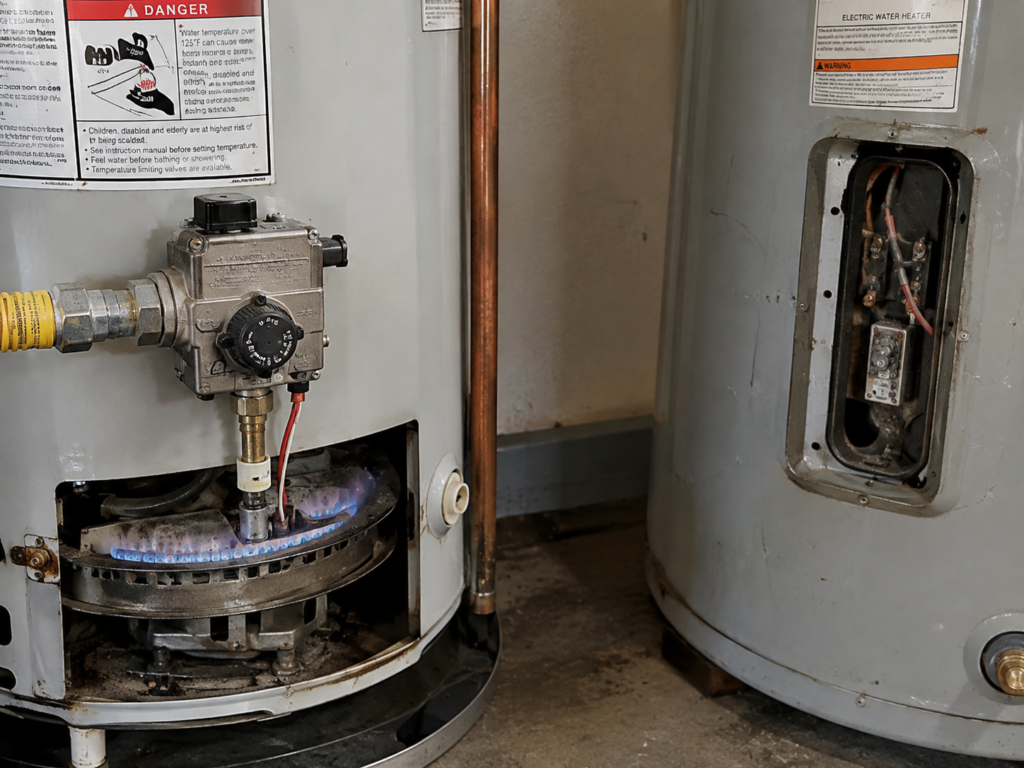
Gas water heaters involve a pilot light and burner assembly, which means occasional issues like ignition problems or burner malfunctions. Electric units avoid combustion-related concerns entirely but can develop issues with heating elements or thermostats over time. If your gas unit’s pilot light keeps going out, that’s usually addressed through pilot light and ignition repair rather than a full system replacement.
Which Is Better for Power Outages?
Gas water heaters with a standing pilot light can continue operating during a power outage, since they don’t rely on electricity to ignite (though some newer gas units do use electronic ignition, which does require power). Electric units stop working entirely without power. If outage resilience matters to you, a traditional gas unit with standing pilot ignition has an advantage here.
Considering a Switch?
Switching from electric to gas (or vice versa) is a bigger project than a straightforward replacement, since it usually requires new utility connections – gas line installation or additional electrical capacity, depending on the direction you’re switching. Our guide to installing a new water heater covers what a standard installation involves, and it’s worth discussing your specific home’s setup with a technician before committing to a fuel-type switch.
Not Sure Which Fits Your Situation?
If you’re unsure whether to stick with your current fuel type or switch, our replacement vs. repair guide can help you think through timing, and comparing against a tankless option is also worth a look if you’re replacing either type anyway.
Frequently Asked Questions
Is gas or electric cheaper to run in Mesa?
Gas typically costs less per month to operate, while electric units usually cost less upfront – the better overall value depends on how long you keep the unit.
Can I switch from electric to gas water heater?
Yes, but it requires installing a gas line and proper venting if your home doesn’t already have gas service, which adds to the project scope.
Which type recovers hot water faster?
Gas water heaters generally recover faster than electric units, which matters most for households with high simultaneous hot water demand.
Do electric water heaters work during a power outage?
No, electric units require power to operate, unlike some gas units with standing pilot ignition that can continue working.
Get Help Deciding
The right fuel type depends on your home’s existing utility setup, household size, and budget. Call (480) 393-5426 for a transparent estimate and a recommendation tailored to your home.
Leave a Reply