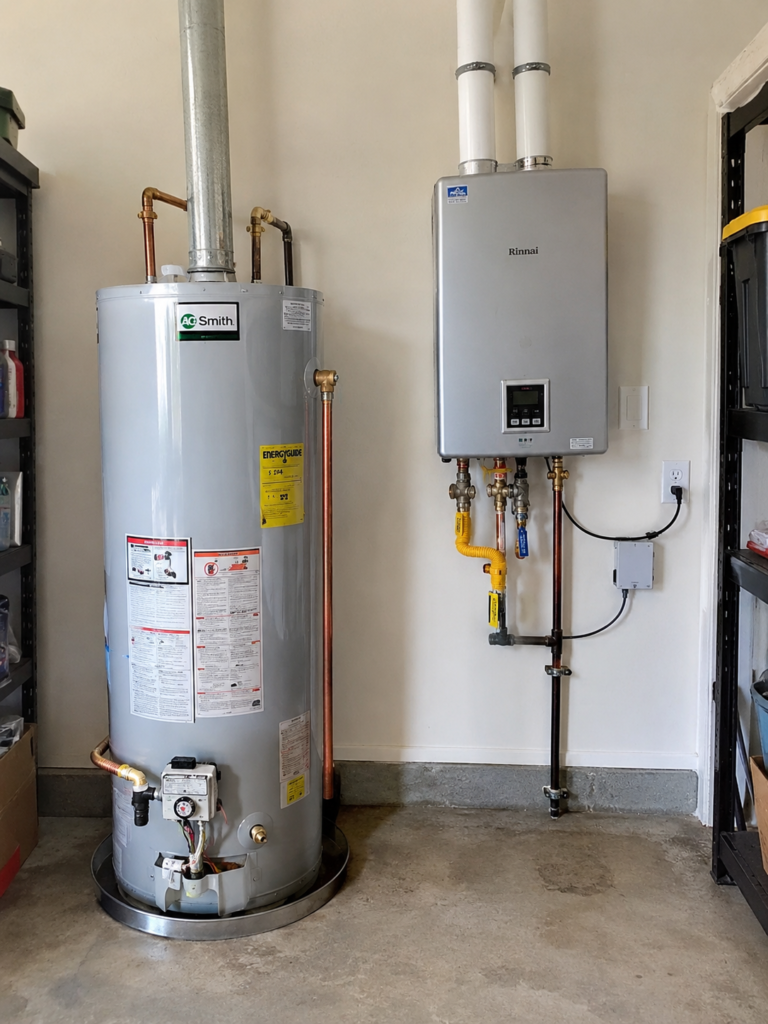
If you’re replacing a water heater or building out a new home in Mesa, one of the first decisions you’ll face is whether to go tankless or stick with a traditional storage-tank unit. Both work well, but they perform very differently – especially in Arizona’s climate and with the area’s hard water. Here’s how they compare.
How Each System Works
A traditional water heater keeps a large tank of water – usually 40 to 50 gallons – heated and ready at all times. A tankless system, by contrast, heats water on demand as it flows through the unit, without storing any. That single difference drives most of the practical trade-offs below.
Upfront Cost
Traditional storage-tank units are generally less expensive to purchase and install. Tankless systems cost more upfront, partly due to the unit itself and partly because installation sometimes requires upgraded gas lines or electrical work to handle the higher demand. If budget is the primary concern, a traditional tank is usually the lower-cost starting point – our guide to average water heater costs in Arizona breaks down typical pricing for both.
Energy Efficiency and Utility Bills
Tankless units only heat water when it’s actually being used, so they avoid the standby energy loss that comes with keeping a full tank hot around the clock. Over time, this typically translates to lower monthly utility costs, though the exact savings depend on household water usage patterns. Homes with high hot water demand tend to see the biggest efficiency gains from switching.
Lifespan and Long-Term Value
Traditional tanks generally last 8 to 12 years. Tankless units often last considerably longer – frequently 15 to 20 years – when properly maintained. That longer lifespan is one reason many homeowners consider the higher upfront tankless cost worth it over time, especially when weighing it against the possibility of a second tank replacement during the same period.
Performance With Mesa’s Hard Water
Mesa’s water carries higher mineral content than many regions, and both system types are affected by it. In a traditional tank, sediment settles at the bottom and can reduce efficiency over time. In a tankless unit, mineral buildup tends to accumulate inside the heat exchanger, which can affect flow and performance if left unaddressed. Either system benefits from regular water heater flush maintenance to manage this – tankless units in particular need it more consistently to protect the exchanger.
Space and Installation
Traditional tanks take up a meaningful amount of floor space, typically in a closet, garage, or utility room. Tankless units mount to a wall and have a much smaller footprint, which can be useful in homes with limited utility space. If you’re considering the switch, our tankless water heater installation page covers what the installation process typically involves.
Hot Water Supply
A traditional tank has a fixed supply – once it’s used up, you wait for it to reheat. A tankless system provides continuous hot water as long as demand doesn’t exceed its flow rate capacity, which matters for larger households or homes where multiple hot water fixtures run at once. Sizing the unit correctly is key here, since an undersized tankless system can still leave you short on hot water during peak use.
Which One Makes Sense for You?
If you’re prioritizing lower upfront cost and simpler installation, a traditional tank is often the practical choice. If you’re focused on long-term energy savings, longevity, and space efficiency – and you’re prepared for the higher initial investment – tankless is usually the stronger option. Homeowners already dealing with a failing unit may also want to read our replacement vs. repair guide to help decide if now is the right time to switch systems at all.
Frequently Asked Questions
Is tankless worth it in Arizona?
For many Mesa homeowners, yes – the energy savings and longer lifespan often offset the higher upfront cost over time, though household usage patterns affect the payoff period.
Do tankless water heaters need more maintenance than traditional tanks?
Tankless units generally need more consistent maintenance, particularly flushing to manage mineral buildup from hard water, but each flush is relatively quick.
Can I switch from a traditional tank to tankless without major renovations?
It depends on your home’s existing gas line or electrical capacity. A professional inspection can confirm what’s needed before installation.
How much hot water can a tankless system provide?
It depends on the unit’s flow rate rather than a fixed tank size – larger households typically need a higher-capacity unit to avoid running short during peak use.
Get a Professional Recommendation
The right choice depends on your home’s size, hot water usage, and budget. If you’re weighing tankless against a traditional replacement, call (480) 393-5426 for a transparent estimate and a recommendation based on your specific setup.
Leave a Reply